
Staying in a ryokan in Kyoto feels less like checking into a hotel and more like stepping into a slower, more intentional way of life. From the sliding paper doors, the cool tatami mats under your socked feet, drinking the welcoming green tea kneeled at a wooden table, the experience is truly a unique one that will make you wonder why and how lodging ever got to the industrial, lackluster way it is today.
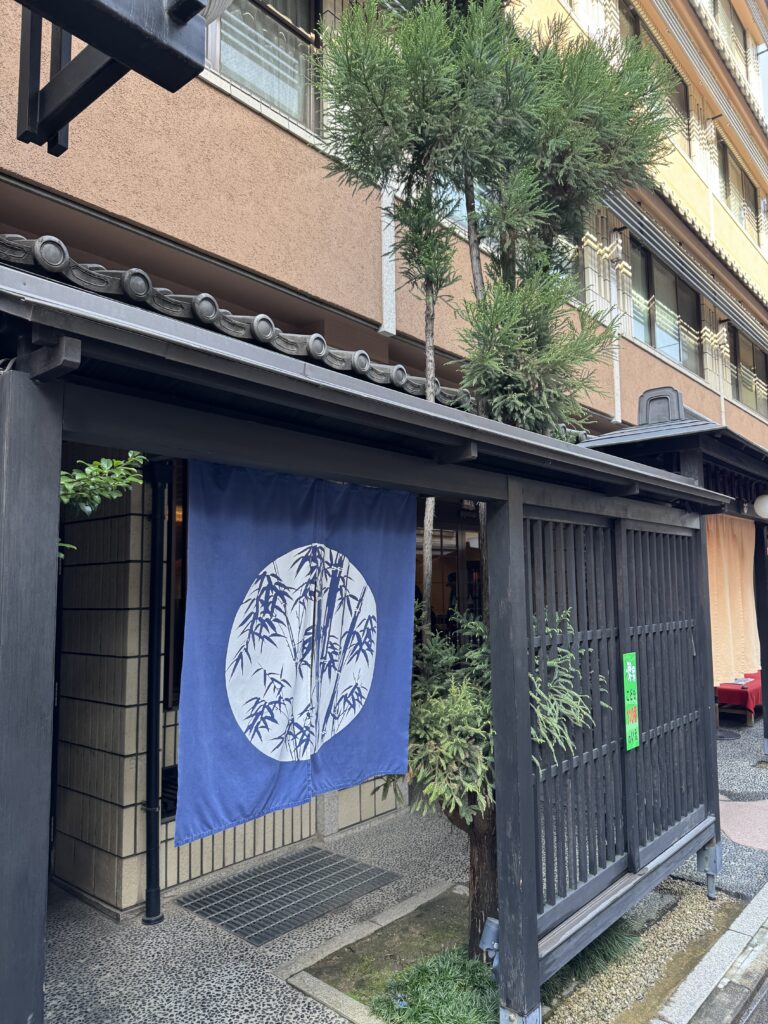
What is a Ryokan?
A ryokan is a traditional Japanese inn that blends centuries-old rituals like kaiseki dinners, a multi-course meal based on seasonality and presentation that are meticulously prepared. Most ryokans also have a traditional onsen which is a hot spring bath, naturally heated by geothermal activity and rich in minerals. Think a more intentional hot tub for soaking, relaxing, and resetting your body and mind. It’s the perfect solution to your tired feet after a day of exploring.
What is the history of Ryokans in Japan?
Ryokans have been part of Japanese life for over a thousand years. They originally popped up as a simple rest house for travelers making long journeys between cities. Think the 700s-1100s when merchants, monks, and samurai needed places to eat, sleep and recover.
As travel expanded from 1603-1868, ryokans came into their own. Japan’s major roads were busy and these inns became more refined spaces with tatami rooms, futon bedding (on the floor), seasonal meals, and deep-rooted hospitality called omotenashi which is thoughtful service without the expectation of a tip.
Over time, ryokans developed around onsen towns, blending the hot spring bathing with overnight stays. Today, Japan has no shortage of hotels, but ryokans have held onto their traditions that make your stay unique and meaningful. Today when you travel to Japan you can find all different kinds of ryokans, from more authentic experiences, to more modernized versions that resemble a cross between a hotel and ryokan.
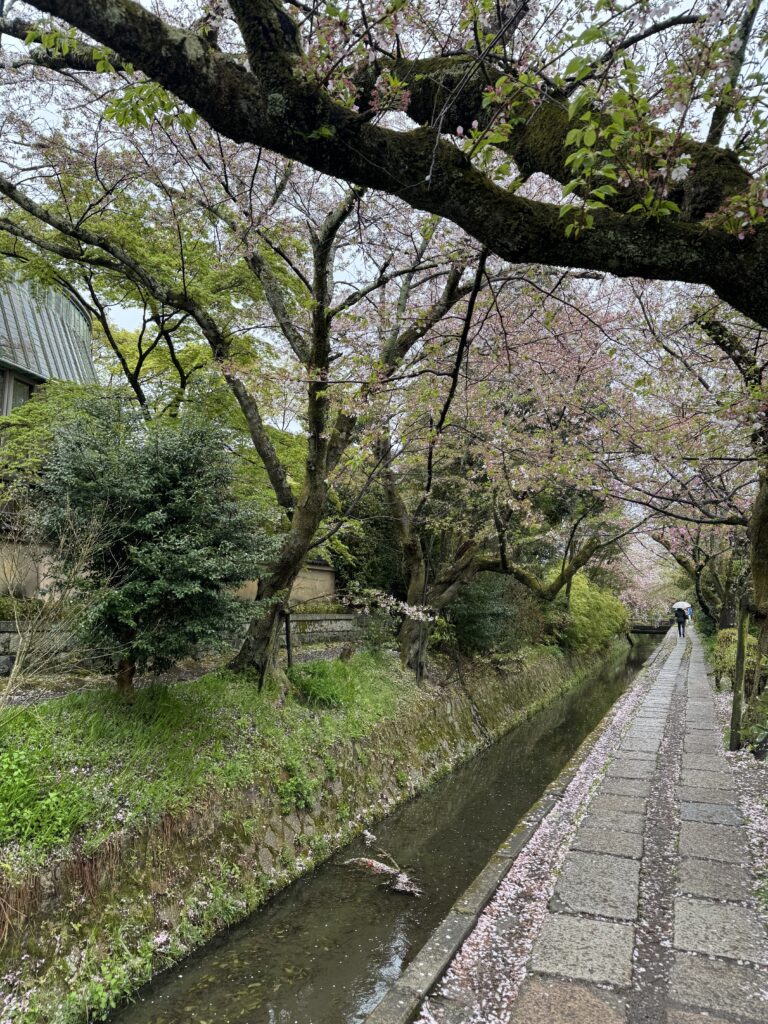
Why is Staying in a Ryokan a Must-Do?
Staying in a ryokan is often something that is skipped on many people’s itineraries when visiting Japan which is truly such a shame because it was one of our favourite experiences on our 2-week trip and one that I would recommend as a must-do for at least one night. Staying in a ryokan really made us feel connected with the culture, appreciating the perfectionism of the Japanese way. Our stay brought so much charm and tradition, an excuse to slow down despite the hustle and bustle happening outside, and truly was something I’ll remember for a lifetime.
Where to Stay in a Ryokan
There are ryokans across Japan, making it really simple to add a stay in anywhere along your itinerary. However, we opted to stay in one while visiting Kyoto. Kyoto was Japan’s imperial capital for over a thousand years and the history still deeply shapes the city. Staying in a ryokan here just feels right and the city has some of the most refined ryokans in the country. Many tucked into historic neighbourhoods near temples, gardens, and lantern-lit streets.
Book In Advance: The important thing is that they book up quickly as many are on the smaller side and don’t have a ton of rooms like a large-scale hotel would. Make sure you book well in advance, especially if you have your heart set on a specific one.
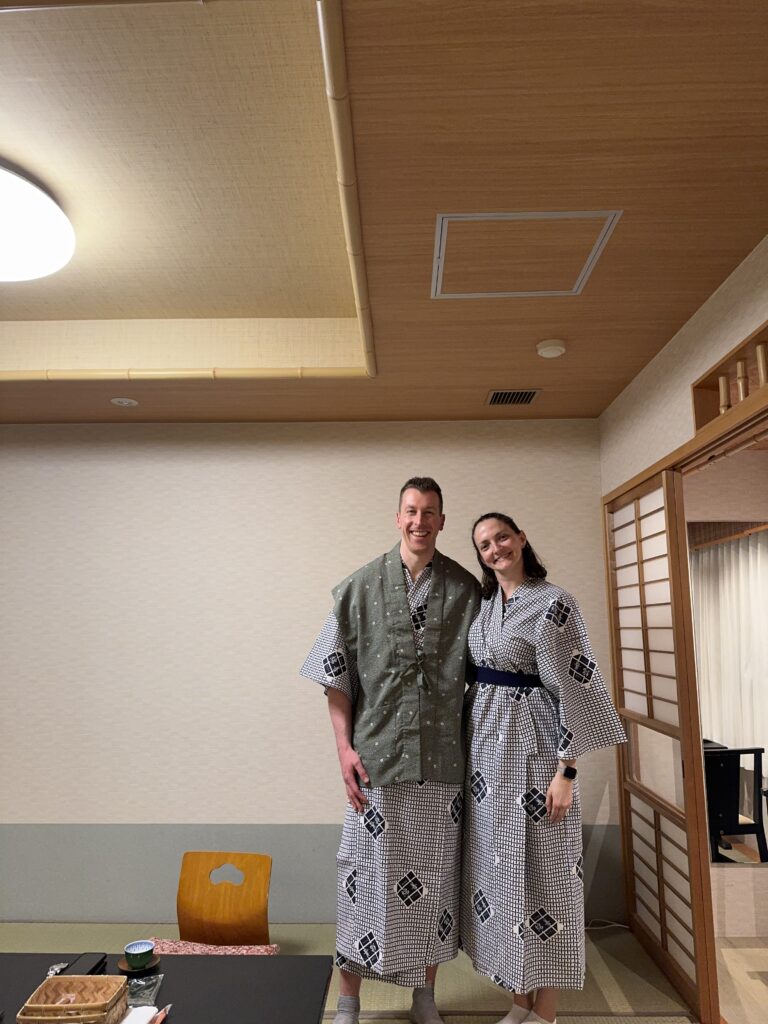
My Ryokan Experience in Kyoto
We booked our trip to Japan only about 4ish months out from when we would actually be leaving. We also booked it during high season (April) so naturally it was a little challenging finding ryokans that still had availability. However, thankfully we weren’t too picky and managed to find availability at Watazen Ryokan.
This centrally located ryokan that has been around since 1830, was surrounded by traditional kyomachiya houses that have been preserved and transformed into a variety of cute, local shops. Although the location was convenient, we planned to hunker down and really get the most of our one night stay at the ryokan vs. only use it as a place to rest our head at night.
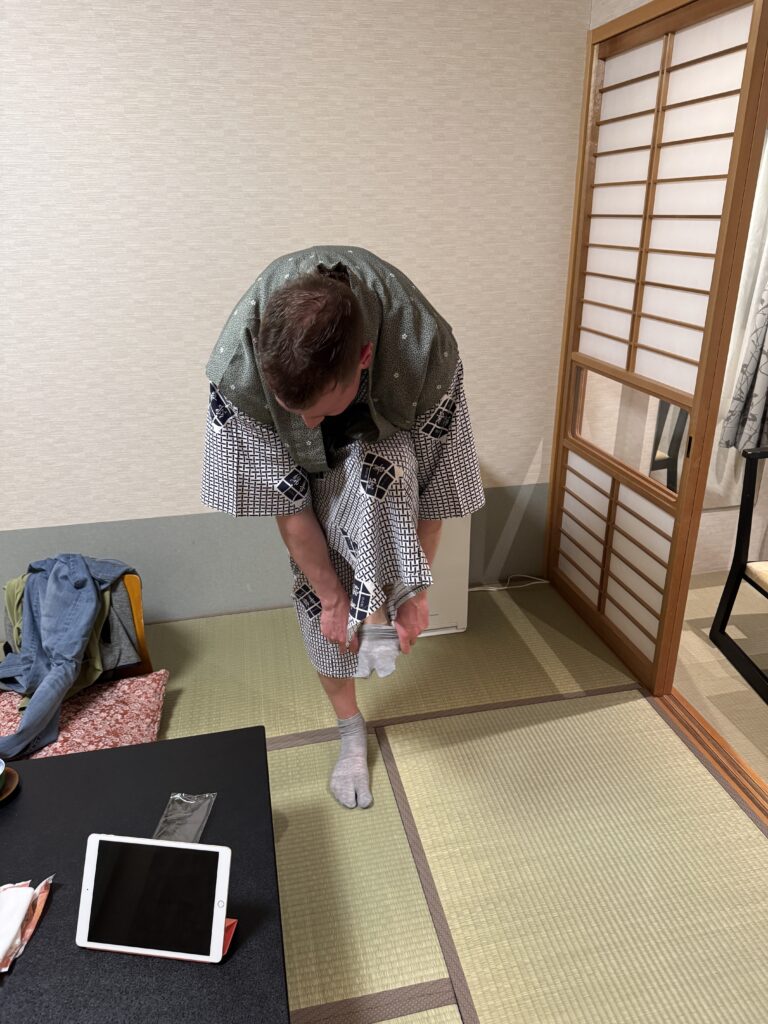
Choosing our Yukata
When we arrived and were checked in, and were offered to choose our size of yukata in reception. A yukata is a lightweight, casual Japanese robe. It’s made from cotton and designed for comfort (vs. the formality of kimonos). In a ryokan, it’s basically your uniform that you can wear when you head to and from the onsen, to dinner, or to lounge around in. Although you can opt for your own clothes, I encourage you to embrace the tradition and slip on a yukata for your stay.
Welcoming
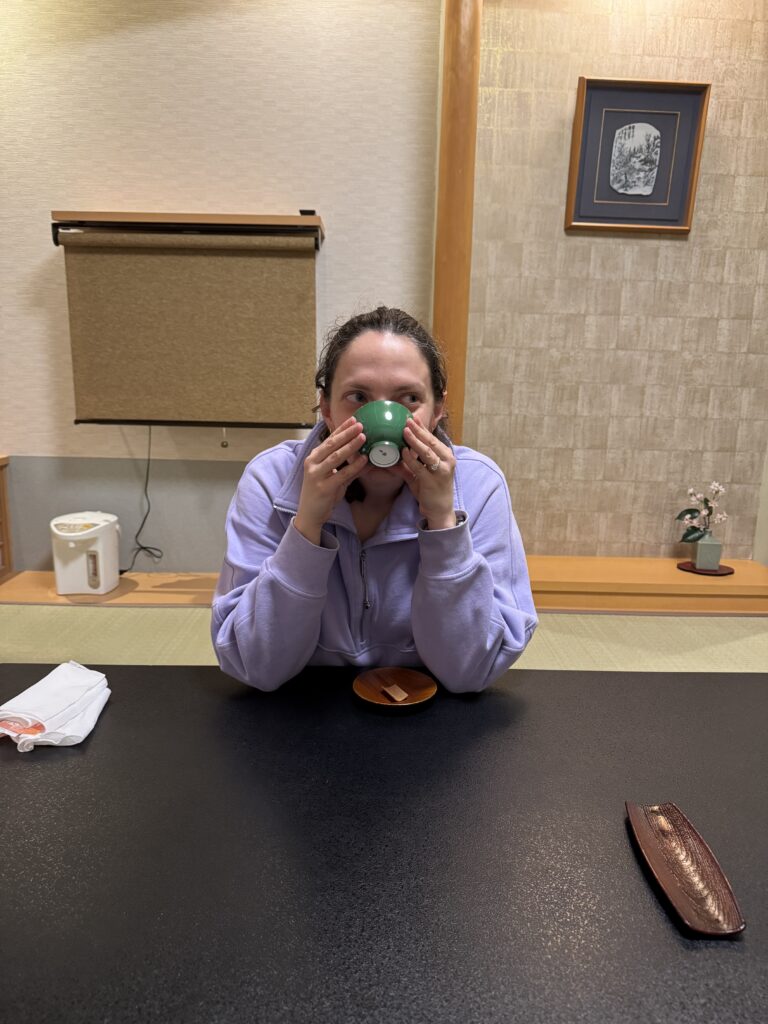
Once we got to our room, shortly after we were greeted by the wonderful staff who presented us with a tea ceremony of hot green tea and snacks, which we enjoyed at our wooden table, kneeled on the floor. The lady who greeted us took us through the need-to-knows of our stay, including where we would meet for our dinner reservation.
Kaiseki Dinner
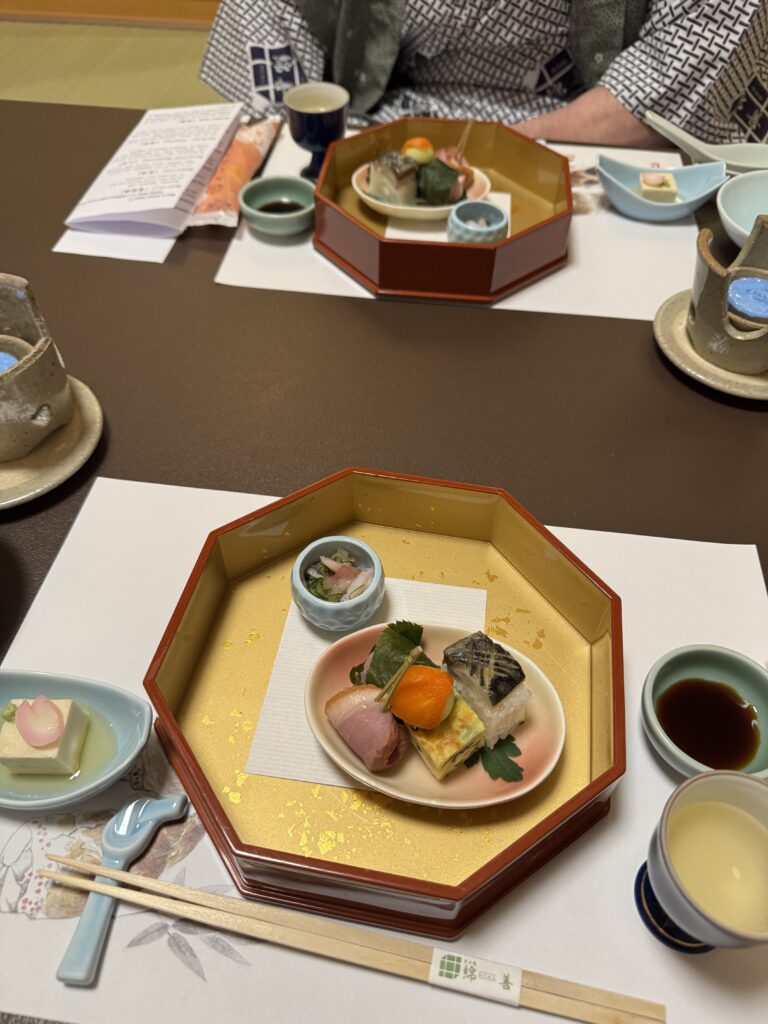
Most ryokans offer the option to opt into different meal options. You can totally tailor your stay and decide to not opt into any meals (a good option if you’re a picky eater since the menu is set) but I recommend you opt for the full experience. Meals are normally booked at the time of your reservation or need to be booked in advance. For our experience, we booked both a kaiseki dinner, and a traditional, Japanese-style breakfast.
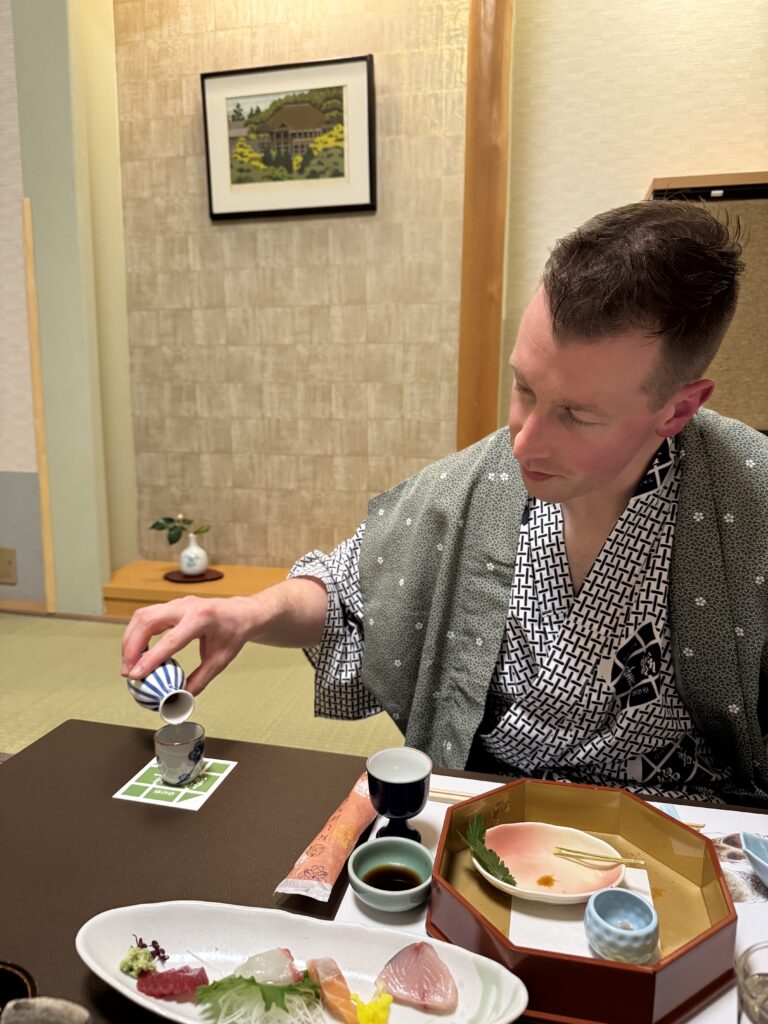
When it was time for dinner, we changed into our yukata and headed to the room next door to ours where we had a private room with a wooden table intended to be kneeled at. We were given the option to order drinks to enjoy with our meal, and we chose a bottle of sake. From here, multiple courses were presented to us over the course of the next hour or so. Each course being made with seasonal, fresh ingredients, and being presented as a work of art. The traditional order of courses usually follows something like this:
- Sakizuke: An appetizer, similar to an amuse-bouche
- Hassun: A plate shocasing seasonal ingredient and flavors
- Mukozuke: A sashimi course
- Nimono: A simmered dish
- Yakimono: A grilled course
- Gohan/Shokuji: Rice, miso soup, and pickles (usually served near the end)
- Mizumono: Dessert, usually light and seasonal
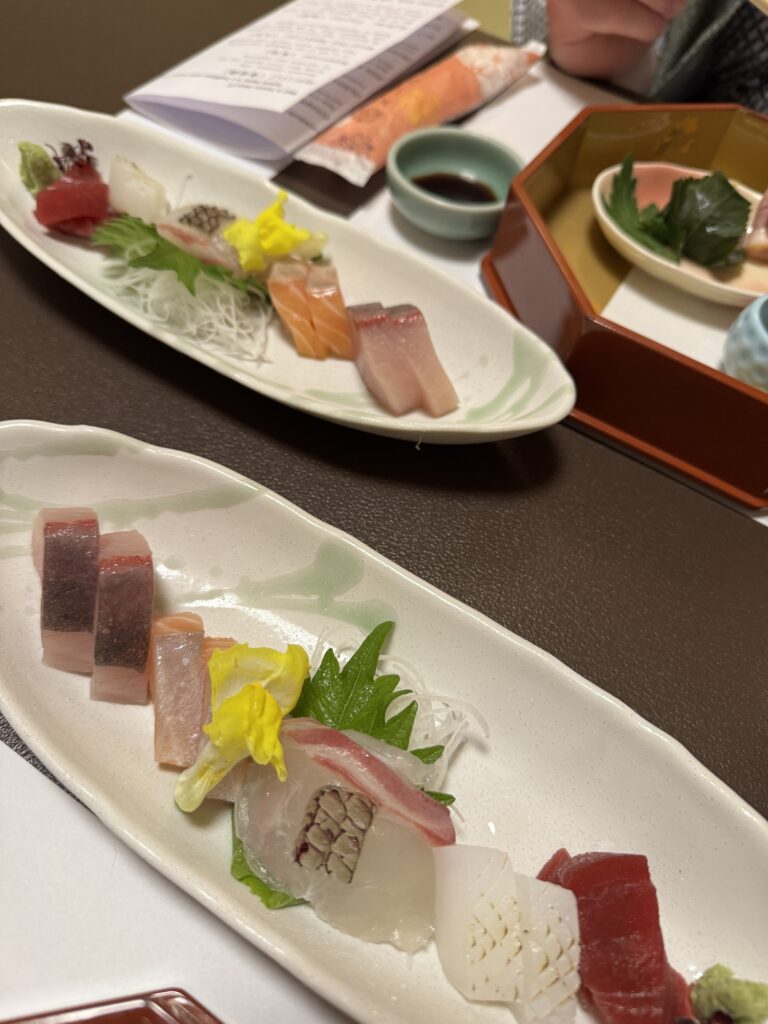
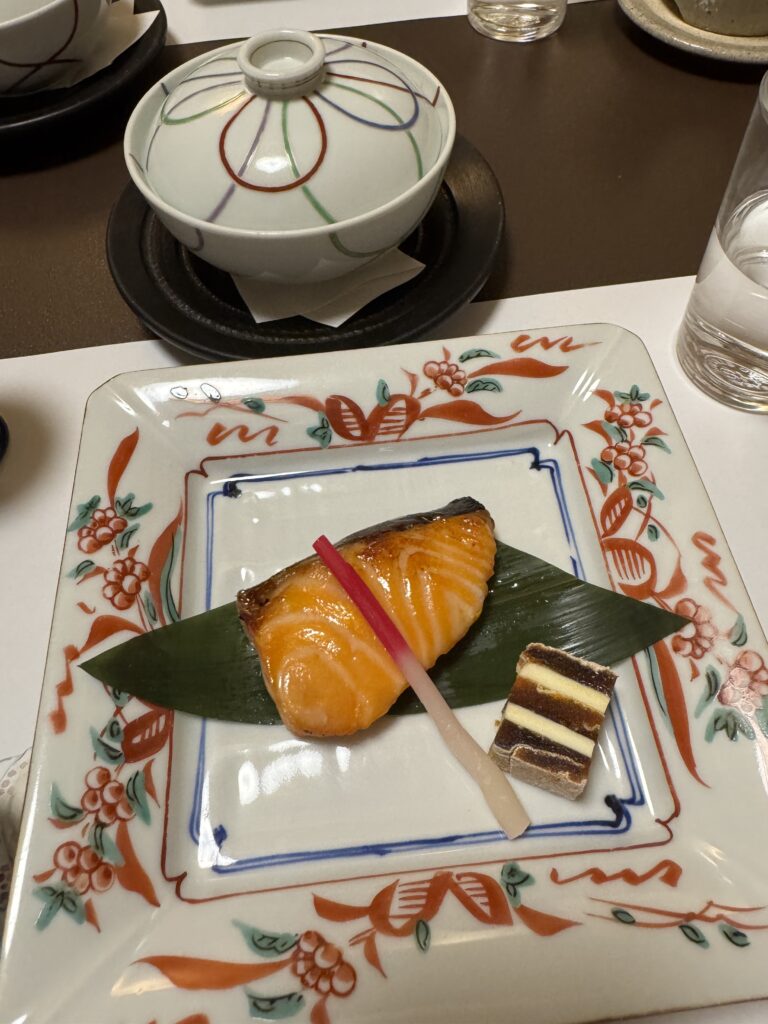
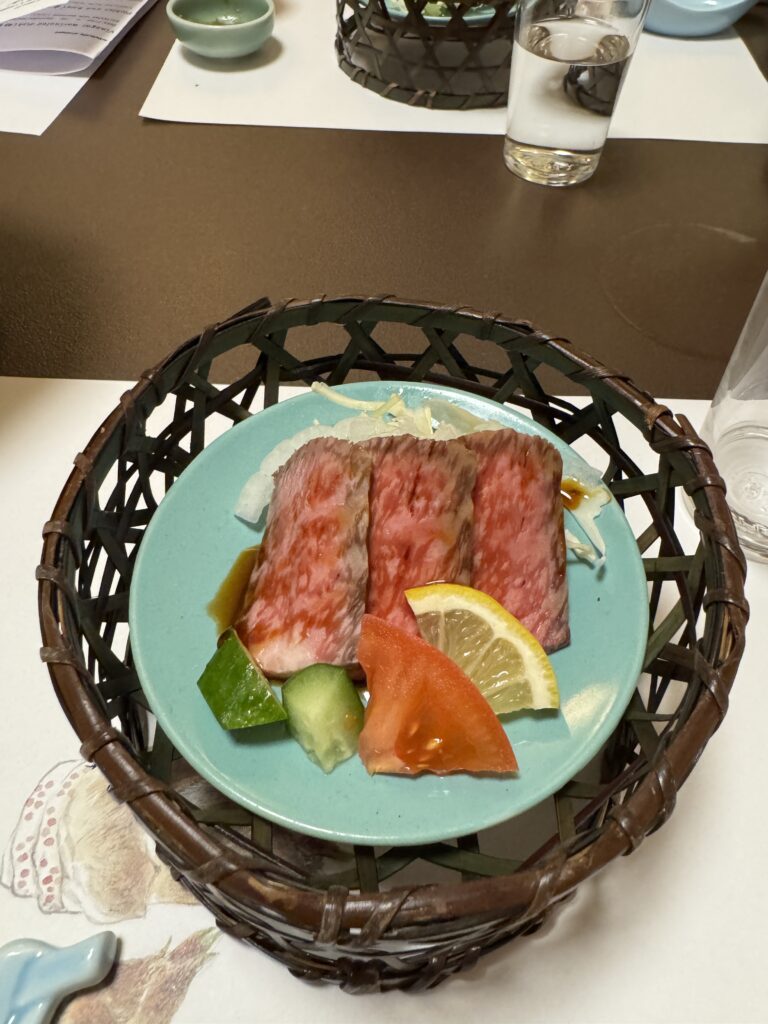
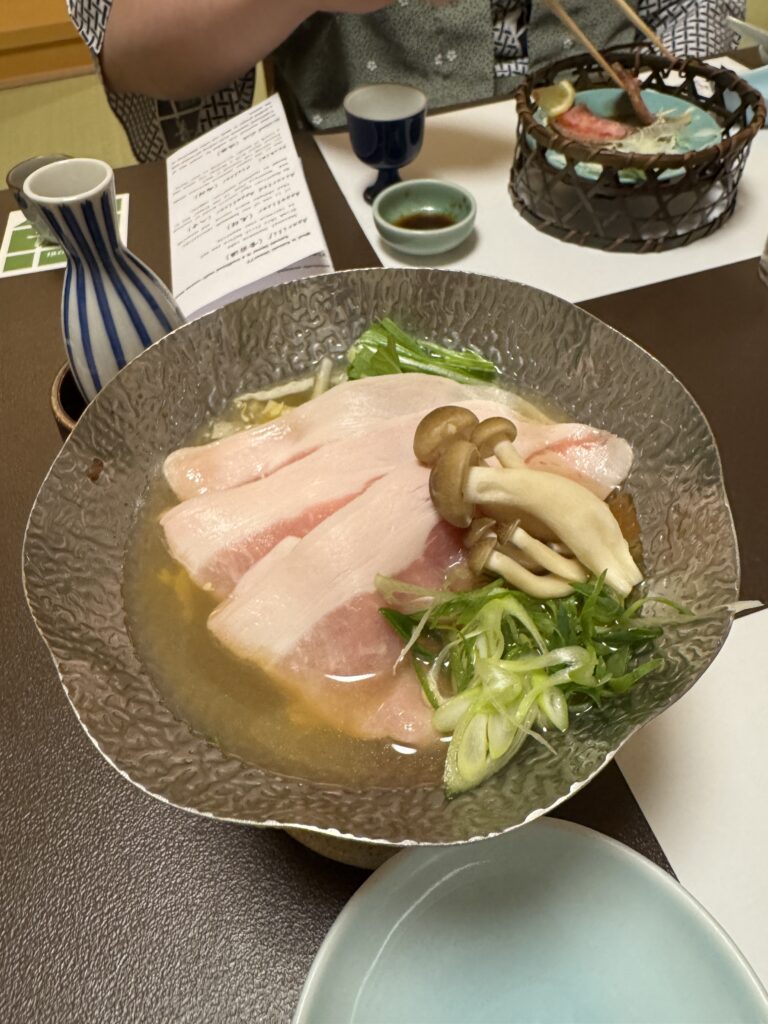
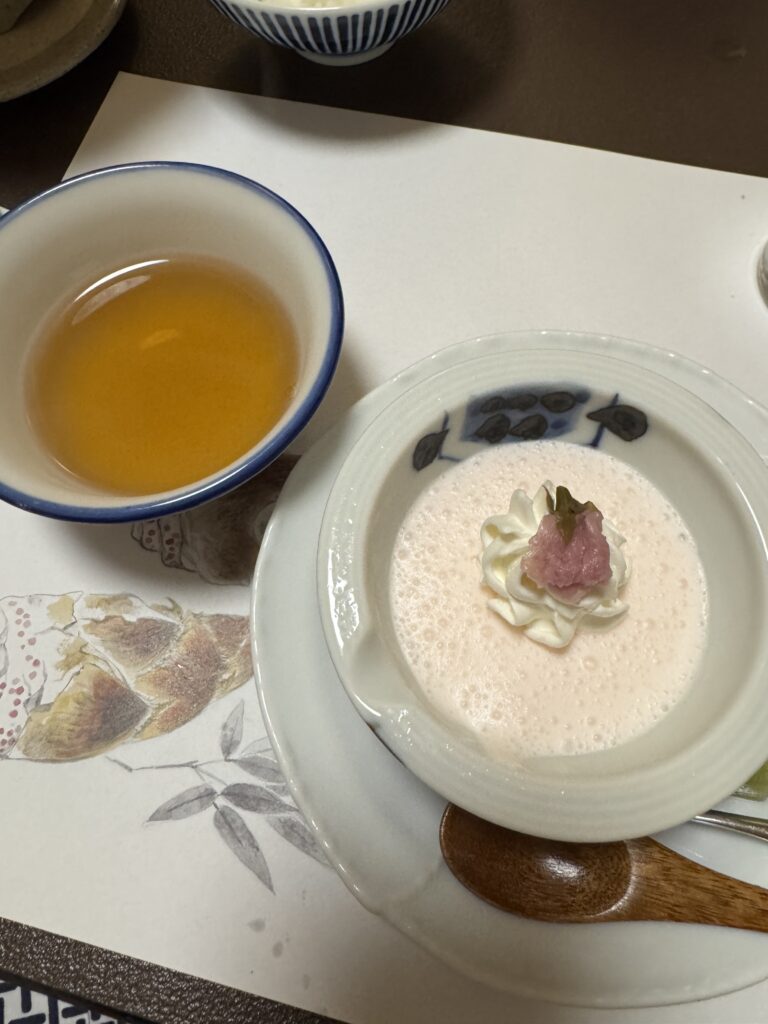
The courses were full of delicious flavors, the freshest ingredients and seafood, and everything was so beautifully presented it almost looked too good to eat. It’s important to note that these sorts of set menus are not made for picky eaters. You have to be open to trying new foods, and eating what’s put in front of you. When booked in advance, you can provide them with any allergies, and some ryokans (like the one we stayed at) will also offer the option of a vegetarian or vegan kaiseki, as well as kids, but ensure you specify this with your booking in advance.
Onsen
After dinner, I opted to try out my first onsen. My husband was very intimidated by it at first, but once he finally caved and went and experienced it he enjoyed it. Most places that offer an onsen provide you with the rules, as well as anything you may need for the onsen in your room. For example, towels, flip flops, etc. It’s important that if they don’t, you look up onsen etiquette online to ensure you are respecting the traditions. This also makes the whole experience less intimidating because you’ll know what is expected of you.
The key things are:
- You must enter the onsen completely naked. No bathing suits or under garments are allowed inside the actual tub/pool. There are usually lockers available in the change room but you can come to the onsen room in your yukata
- You should bathe yourself with the provided washing stations entirely before entering the onsen waters. Usually there are little stations equipped with a stool, a shower head, soap, shampoo, etc.
- You should remain quiet in an onsen to keep the peaceful atmosphere
- If you have tattoos, double check if you are allowed to enter the onsen. Many do not allow bathers with tattoos or require you to entirely cover them up with something like this
For many westerners, the idea of being entirely nude in front of strangers seems intimidating, but I promise you, no one is there to stare at you or judge your body, everyone is there to relax and winddown after a day of exploring. Just embrace the new experience and traditional experience.
Sleeping Arrangements
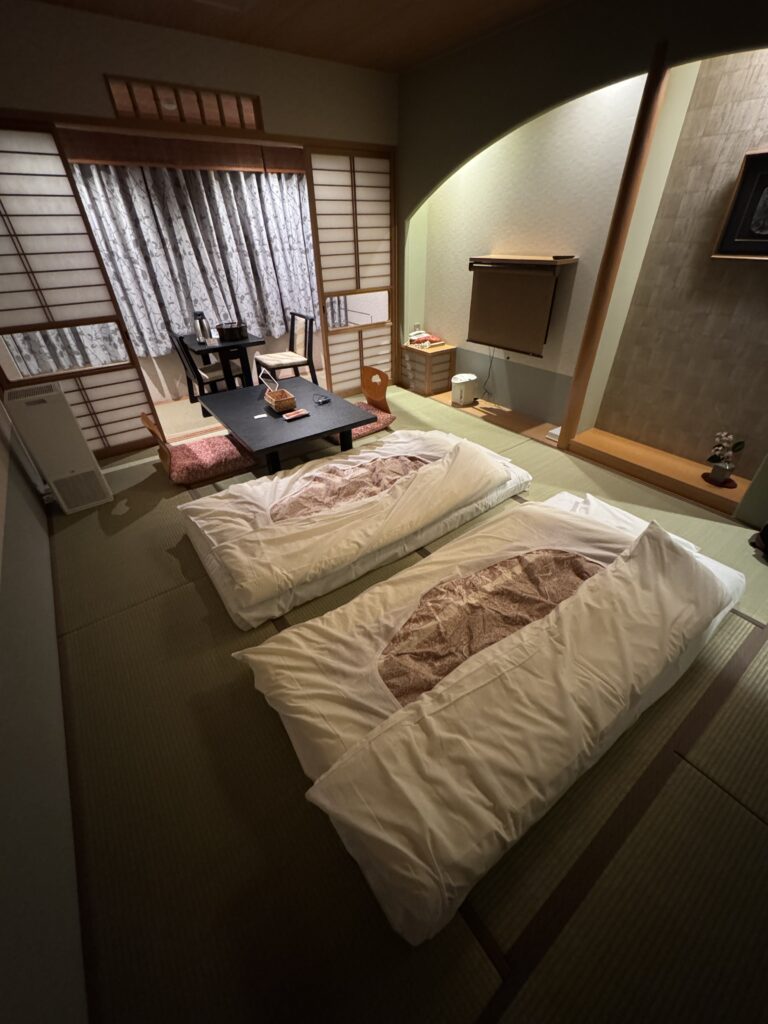
In a ryokan, the traditional inns will convert your room from a large, seated area with a table, when you first arrive, to a cozy floor bed often referred to as a futon (modern ryokans do usually offer room options with beds). While we were at dinner, our room was converted over to our sleeping arrangements. They included blankets, sheets, pillows, and a mattress laid out on the floor. It kind of felt like elevated camping and was really cozy. In fact, our biggest room we had in all of our time in Japan was at the ryokan. We settled in for a good nights rest.
Breakfast
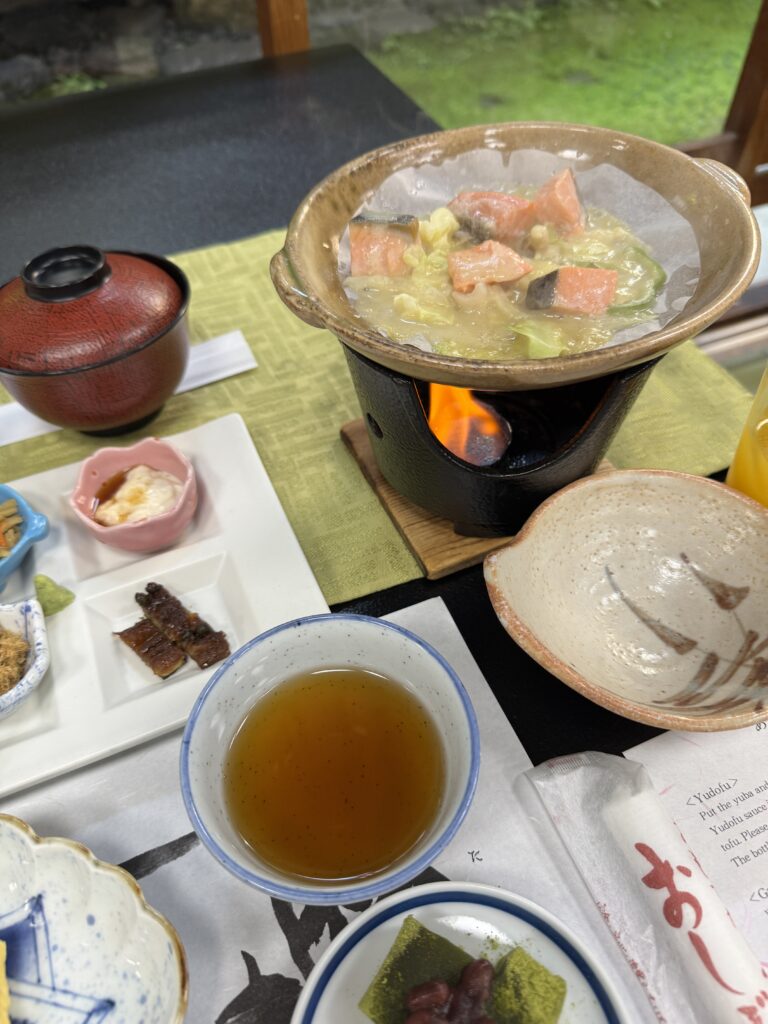
In the morning before we checked out, we headed to a breakfast room where we had a Japanese-style breakfast. For this meal, it wasn’t private, but like the previous nights dinner it was a set menu that was beautifully displayed on your table in various different plates, bowls, etc. The breakfast included (which I’m sure changes based on the seasonal):
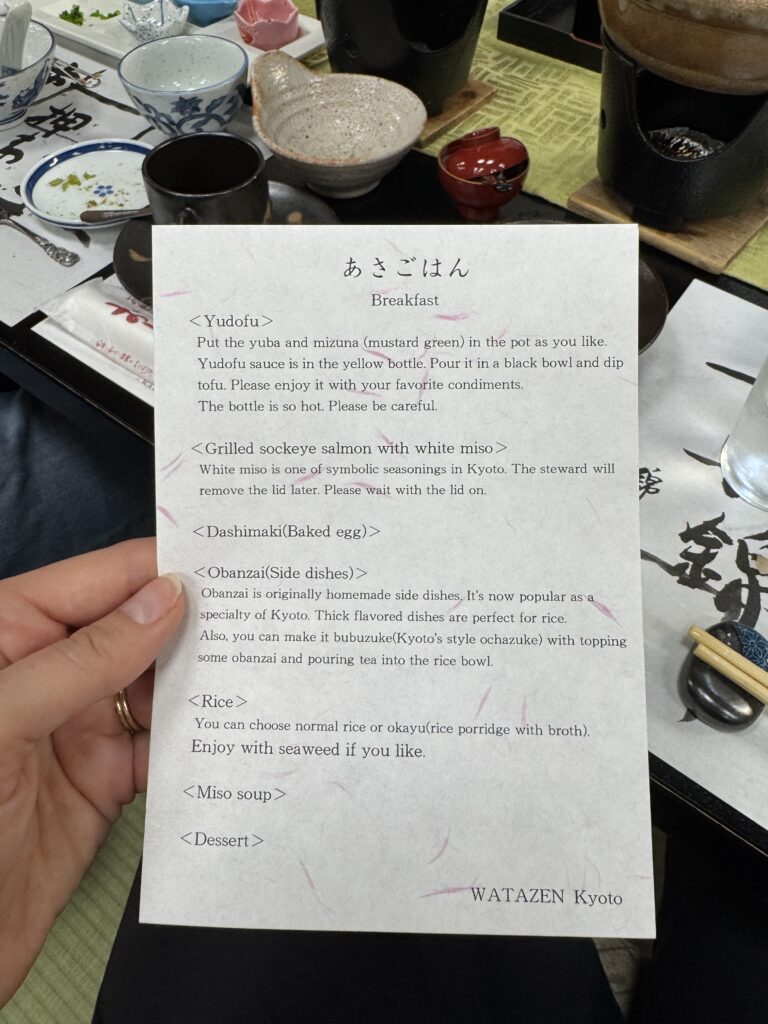
We loved experiencing the different dishes, and trying our first Japanese-style breakfast since most of our hotels on our trip had a typical buffet with fruits, yogurt, eggs, etc. that you’d find anywhere. They also offered a vegan or vegetarian menu if you booked in advance. Again though, if you’re a picky eater, opt out of booking breakfast and do your own thing outside of the ryokan as you can not tailor your order.
After breakfast, we sadly checked out to head to a modern hotel for the rest of our time in Kyoto but I wish we could’ve stayed for longer. It was such a relaxing, zen, traditional experience that I highly recommend as an add-on to your itinerary for Japan, whether it’s your first time there or you’re a repeat visitor. You can opt for something more modern, more traditional, and they even have some ryokans that have private onsens in your rooms if you’re looking for a more private, romantic experience. Whatever you choose, I can promise it’ll be a travel memory that will live rent-free in your head for years to come.

No Comments