
You don’t need me to tell you that matcha has taken over the Toronto cafe scene, and as a long-time matcha lover, I’m not complaining. From traditional whisked matcha to creative spins on matcha lattes and unexpected flavour combinations, the city is full of places, both old and new, serving up matcha drinks.
I’m going to be transparent, almost every matcha latte I get outside of my own kitchen is disappointing to me. There are a lot of cafes doing it, but very few are doing it right. You’ll find several cafes using low-quality matcha powders, not enough matcha powder, so you end up with light green milk, or are skipping the steps of the traditional qualities of making and enjoying matcha tea for convenience. And to me, spending $9 on a latte only for it to be lackluster is incredibly frustrating.
With that said, there are definitely a few places in the city that are doing it right. Here are my top five recommendations (with a bonus one at the end) and my recipe and tips for making it at home.
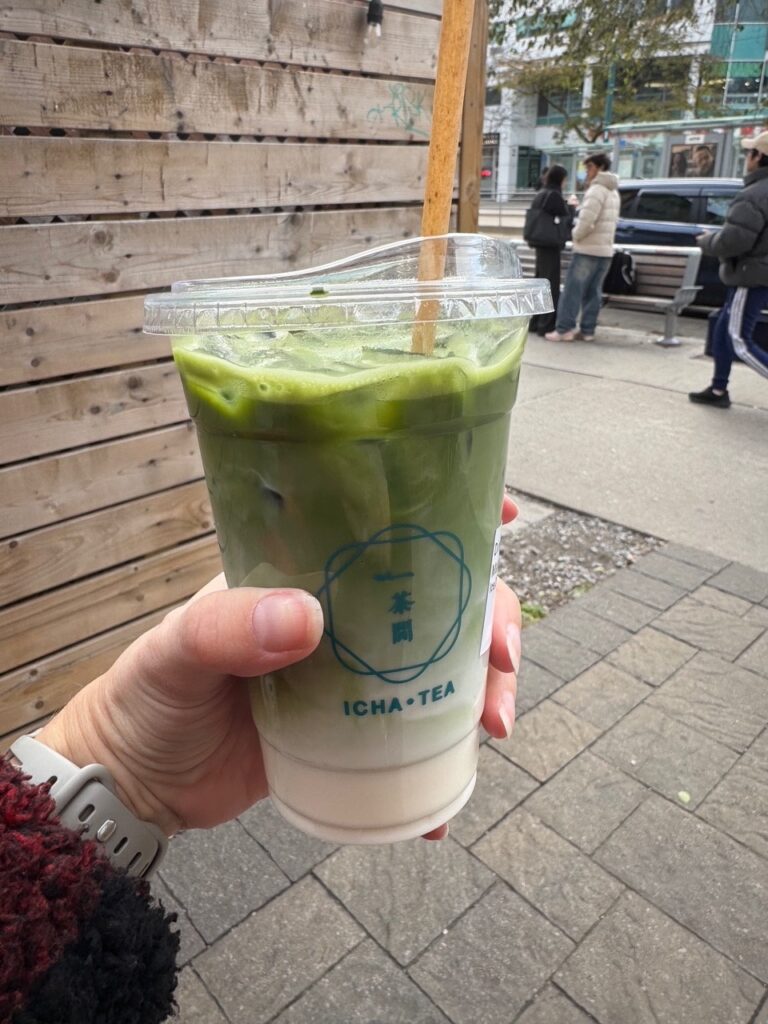
Icha Tea
If you’re looking for a cozy tea bar centrally in Toronto, Icha Tea is a must. Located in Chinatown, this tea shop specializes in Asian tea culture and offers all sorts of unique and traditional tea drinks from loose-leaf teas to crafted matcha drinks. The space looks small from the outside, but goes far back with plenty of seating. They even host tea tasting events and matcha omakase (tasting menu) experiences.
Their matcha menu gets a lot of hype and for good reason. You’ll find classic matcha lattes alongside creative drinks like strawberry matcha and mango matcha. Everything is made with quality tea and prepared fresh (aka whisked right in front of you).
Archi Element
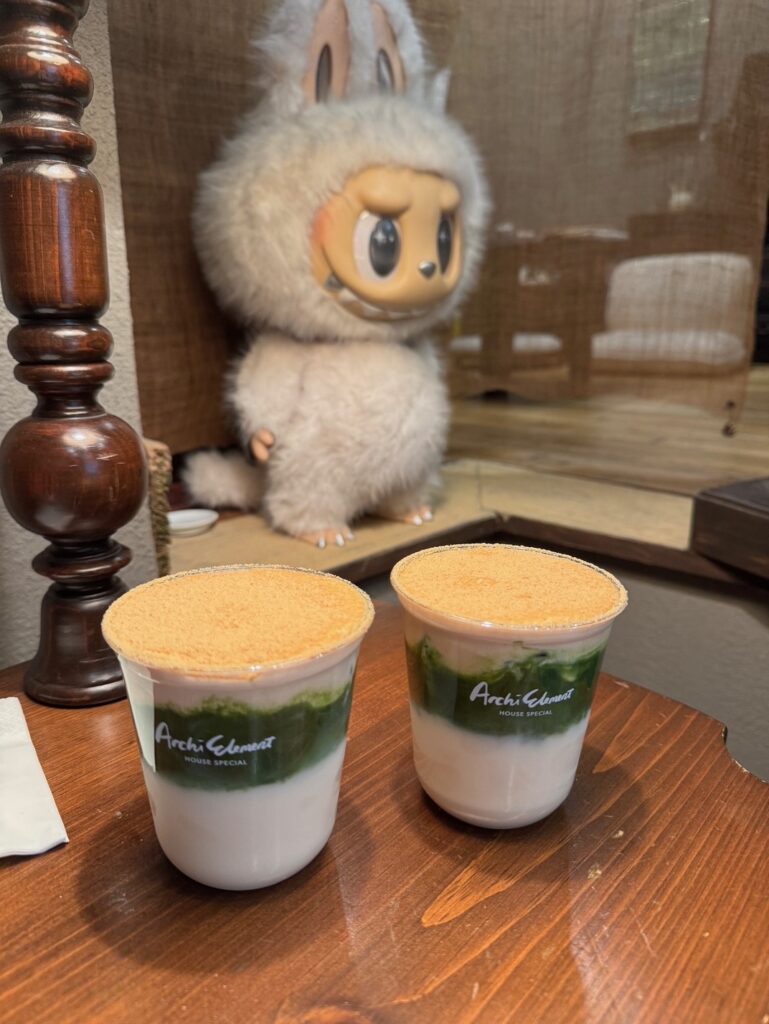
Archi Element is a hidden gem located in the city’s west end on College Street. It is a tiny spot with minimal seating and has a minimalist aesthetic with a pottery shop in the front that transported me right back to Japan. This cafe is doing more than just your regular matcha lattes; each drink they have is a work of art, excelling in both the flavour and presentation. Think fluffy foam tops, beautifully layered drinks, and delicious (and unique) flavour profiles.
They have seasonal drinks and menus, but when I visited, I had The Green Beard, which is matcha with soy milk, with a decadent cheese foam, and a dusting of kinako powder (a Japanese roasted soybean flour with a nutty, toasted flavour). The drink was so decadent that I left thinking that I’m thankful I don’t live anywhere near this cafe or I’d be tempted to go daily.
Three Dots
If you love specialty coffee shops, you’ll love Three Dots Coffee Lab. This spot isn’t just dedicated to tea; you can get personalized, luxurious coffee drinks here as well.
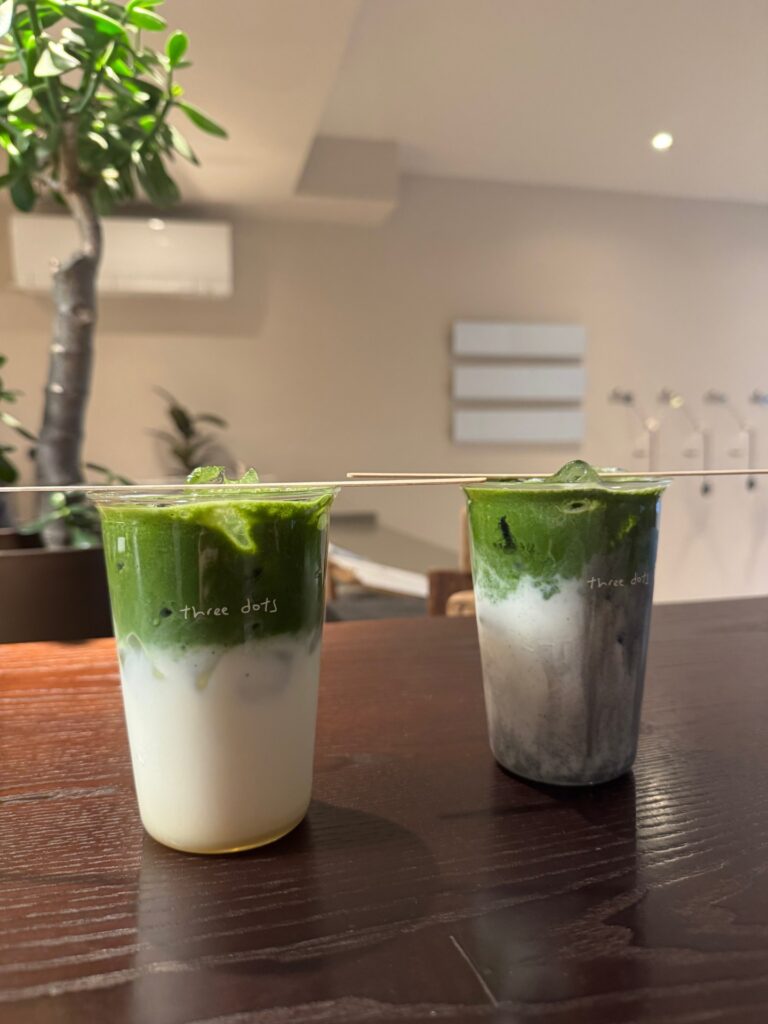
Located near College and Ossington, this cafe may have “Coffee Lab” in the title, but they know how to make a good matcha drink that is equally impressive. The space has lots of seating for sitting back and enjoying your matcha, and a mix of classic and seasonal drinks to choose from. When I visited, they had three main matcha drinks:
- Jasmine Matcha Latte
- Black Sesame Matcha Latte
- Matcha Latte
I tried the two flavoured lattes, and the flavor was delicious. I appreciate when cafes do flavoured lattes that give a unique twist on a traditional matcha latte, but that the flavour doesn’t overpower the flavour of the matcha. Three Dots nailed this balance and I cannot wait to return!
The Brick Room
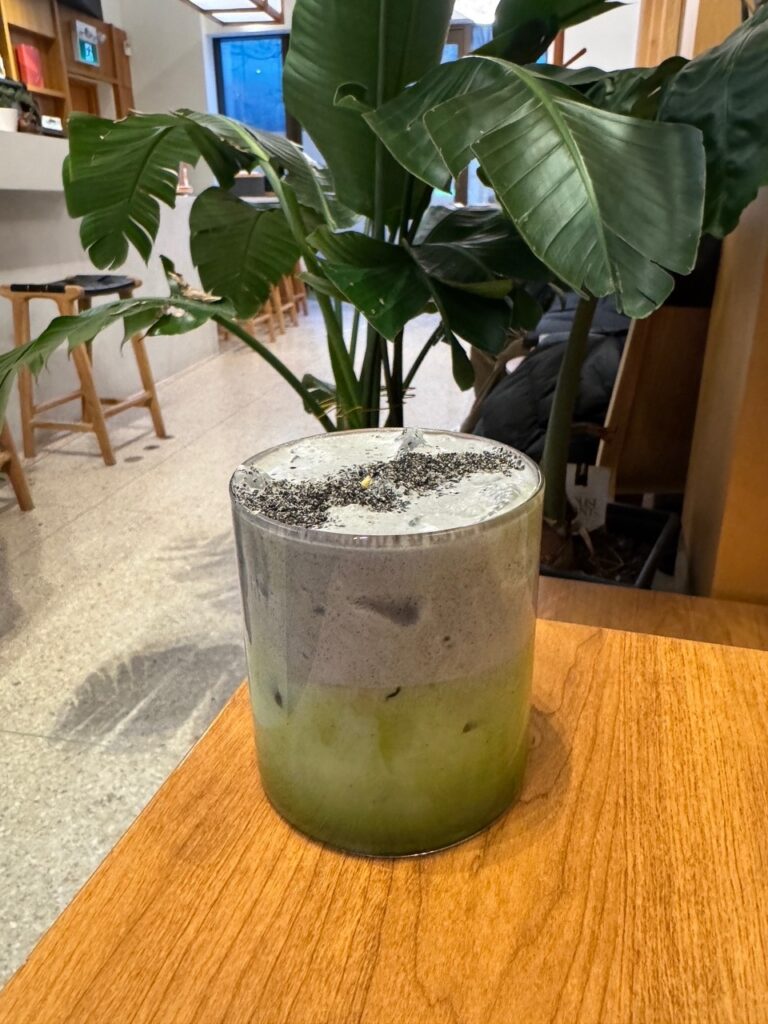
Located in Toronto’s Financial District, The Brick Room is a cafe that takes both matcha and coffee seriously. They offer a typical coffee and tea menu, but also seasonal menus that seem more like an art form. Each drink is perfectly crafted, and you can tell how much love and work go into making these next-level beverages.
Although the regular menu is priced similarly to other cafes in the city, the seasonal menu can get pricey, but it’s worth it for an extra treat. I recommend that when ordering one of their bougie lattes, you plan to sit and enjoy it at the cafe vs. taking it to go.
Both times I’ve gone, the two seasonal matcha drinks I got were fabulous. Like I still dream about them to this day and can’t wait to go back.
Wu Wei
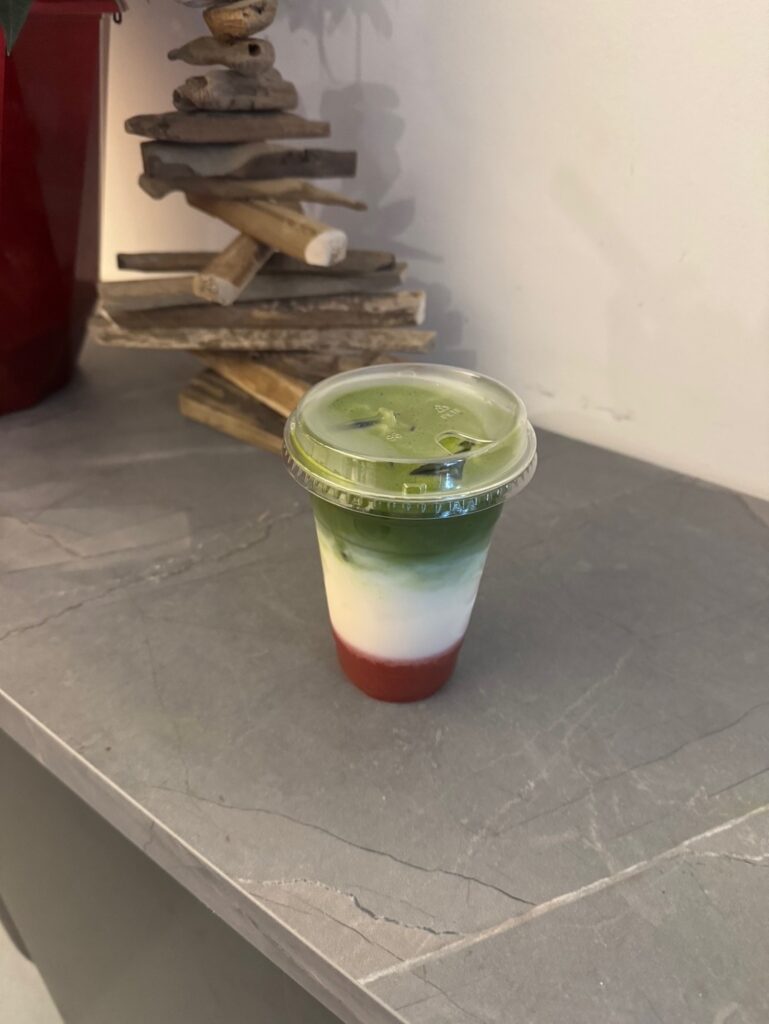
Tucked in Kensington Market, Wu Wei is one of the city’s most popular spots in matcha over the last couple of years. The cafe blends traditional tea preparation with modern drinks and has a lengthy menu of coffee, hojicha, and matcha drinks you can choose from.
The cafe is small and only has standing room spots to enjoy your drinks, but it’s definitely worth a stop on your matcha tour of the city. Some popular menu items are the blueberry or strawberry matcha, coconut matcha, and the matcha cortado. What I like is that they give you the option to upgrade your matcha with an additional 2g of tea, which I find necessary for some of their flavored lattes, where the puree/syrup can overpower the strong matcha taste.
BONUS! Ninetails Coffee Bar
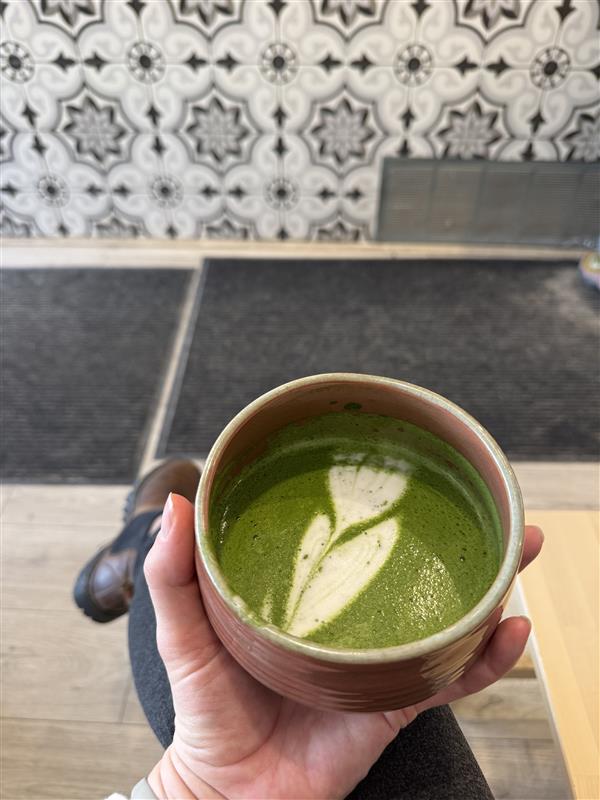
A Japanese-inspired cafe located on Bloor Street West, Ninetails has a simple matcha menu, serving matcha lattes, usucha (matcha served the traditional way, not with milk), and matcha tonic. They use quality matcha, and the colour and flavor are delicious. Not too sweet, and the milk doesn’t overpower the matcha flavour you love (at least in the hot latte as I haven’t tried the iced).
Honourable Mentions
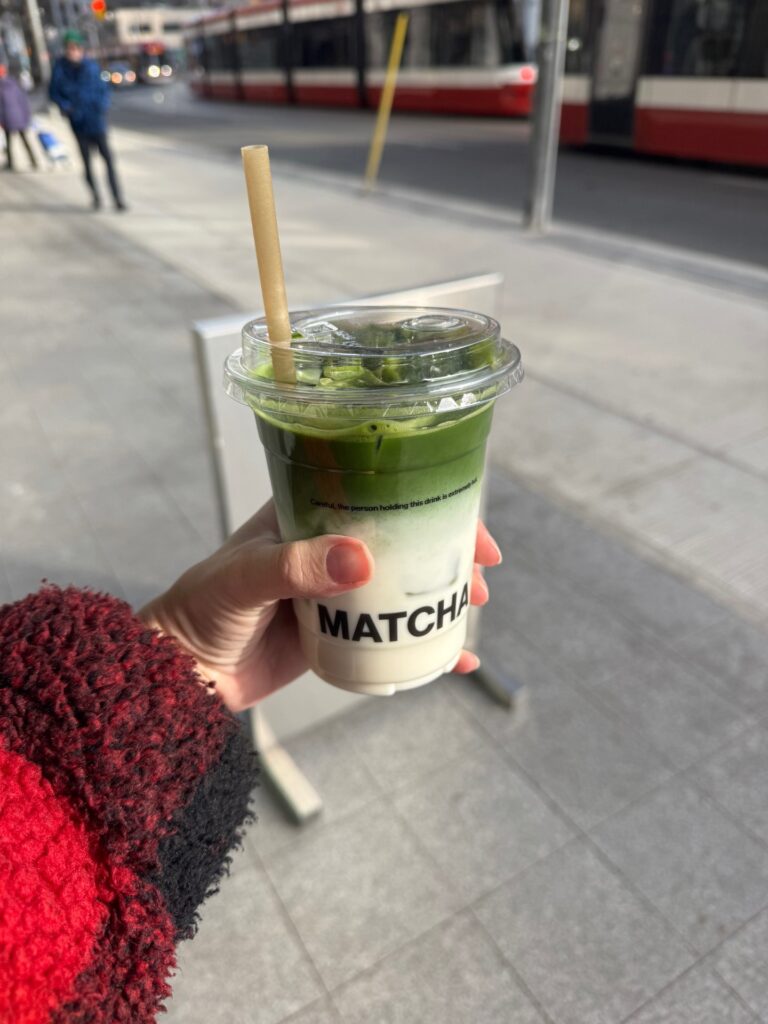
Not to say these places below aren’t great, but they wouldn’t make it to the top of my list. Think of them as spots I’d go back to for convenience, but I’m not still dreaming about their matcha like I am with the five I mentioned above.
- Matcha Matcha (Vanilla Bean Tonka Matcha – not a strong taste of matcha but the flavor syrup is delicious)
- Matcha Haus
- 10 Dean (specifically for their Whisk It Up: The Art of Matcha Making workshop)
Making Matcha at Home
Going out for matcha or coffee can add up quickly in the city. Lattes are averaging anywhere from $7-$10 CAD, which can be steep for a daily habit. I know making a special drink at home doesn’t always hit the same as treating yourself at a cafe, but I promise you, when you take the time to learn how to properly make matcha at home, it can often be better than a lot of cafes you’ll find in the city.
Tools Needed
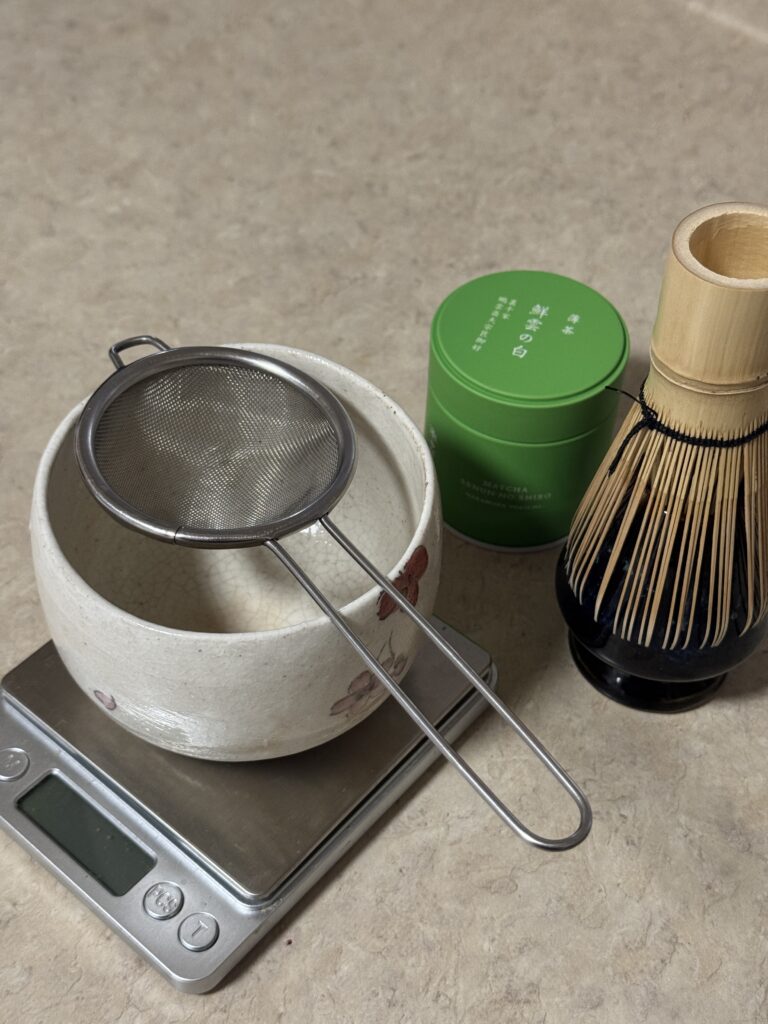
Here are the tools I recommend to really level up your at-home matcha game. You can also buy a lot of these things in kits:
- A food scale that is sensitive enough to weigh powder (here is the one I have)
- Quality matcha (more on that below)
- Mini sifter (like this)
- Matcha bowl (or a bowl with a flatter bottom for easier whisking)
- Bamboo whisk (like this)
- A kettle where you can control the temperature
- A spoon or a traditional chashaku
Choosing a Quality Matcha
Grades of Matcha
Many people believe that you need ceremonial grade matcha in order to achieve a good matcha latte but the reality is, ceremonial grade, although the highest quality, is used for drinking in tea ceremonies or on its own. If you are diluting your matcha with milk (or even more water in a matcha americano), you do not need the highest quality of matcha.
There are usually three “grades” of matcha you’ll mainly see: ceremonial, premium, and culinary. If you are making lattes, you can reach for the middle-ground, premium-grade matcha powder. This powder is still high quality but is slightly stronger and more robust than ceremonial, which is why it works well when diluted with milk in water.
Most cafes are using premium-grade matcha over ceremonial, despite popular belief that ceremonial matcha is the one and only way to go.
Origin of Matcha
The next thing you’ll want to consider is the origin of the matcha. The highest quality of matcha almost always comes from Japan, where the cultivation and processing methods were developed centuries ago. If a matcha package simply says “matcha powder” without listing Japan as the origin, it’s often a sign the quality may be lower.
Specific regions in Japan that are particularly known for their matcha and tea are: Uji (Kyoto), Nishio (Aichi), and Shizuoka. Skip vague origins on the label like “Product of China” or “Asian Green Tea Powder”.
Colour
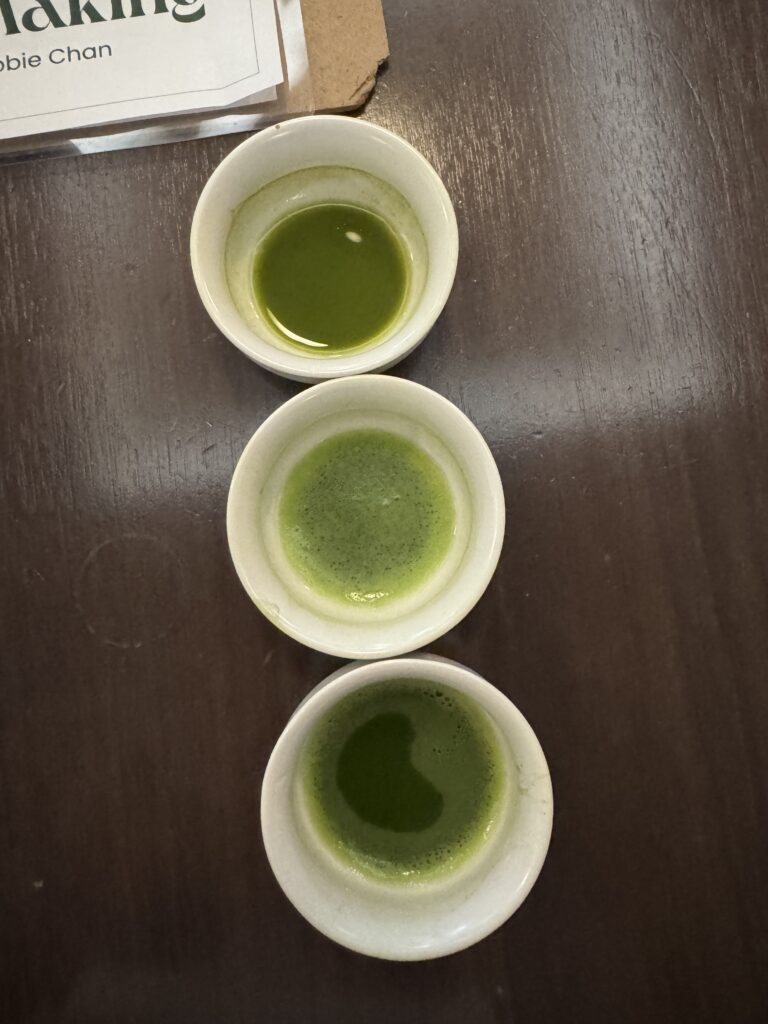
The next important thing to consider in your powder is its colour. Good matcha is a bright, vibrant green, slightly jade or emerald coloured. It should be a fine powder with a soft, silky appearance. Lower quality or expired matcha may be a dull green or olive green, yellowish or brownish, or flat, dusty-looking. Simply put, the brighter the green, the fresher and higher quality the matcha usually is.
Expiration
The other thing that many people don’t know is that matcha has a best-before date. Look for on the jar a production date and/or best before date. Generally, this is the rule of thumb, give or take a few weeks:
- Unopened matcha: about 6–12 months
- After opening: best consumed within 1–2 months
To keep matcha fresh:
- Store in an airtight container
- Keep it in a cool, dark place
- Many people store it in the fridge to slow oxidation
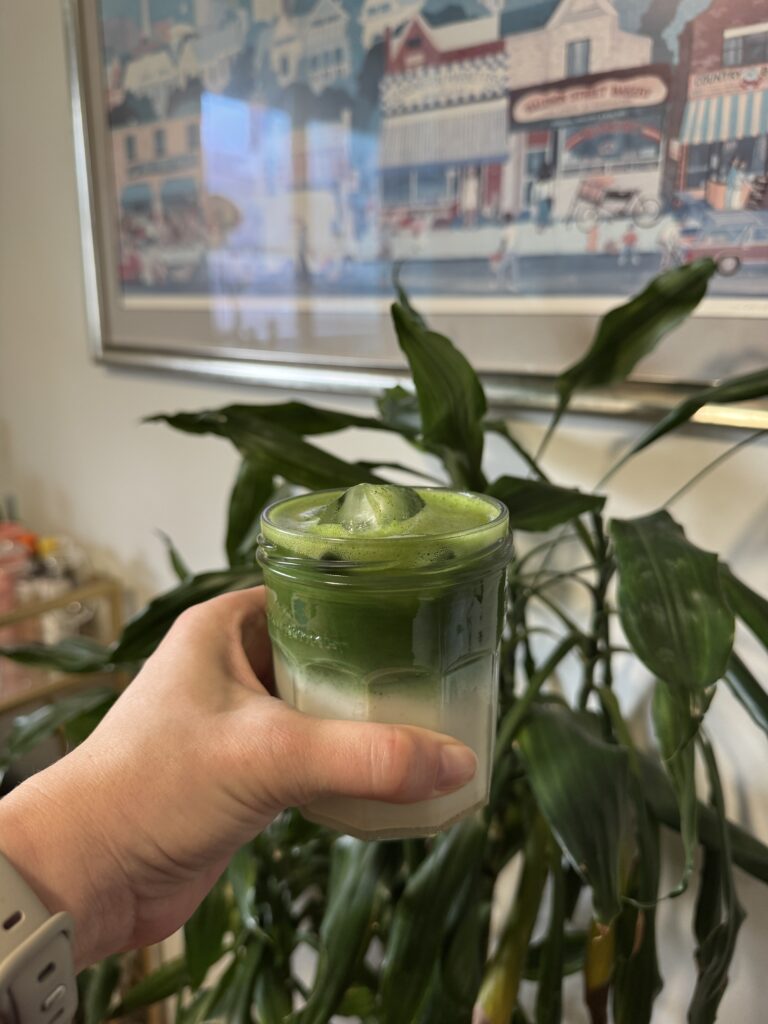
How to Make an Iced Matcha Latte
Note: Everyone has something to say on ratios of milk, water, and powder. I’ve done a lot of trial and error, and the below is what works perfectly for me. If you want a bigger matcha than this creates, you’ll naturally need to increase the ratios.
- Heat water but don’t fully boil it. This is where having a kettle you can control the heat comes in handy. I set mine to 80 °C, if you don’t have this kind of kettle, turn it off right before it reaches a boil or let boiled water sit for a bit to cool down. Using boiled water can ruin the nutritional benefits and flavour of the tea.
- Meanwhile, place your matcha bowl on the scale and clear it. Measure out 3G of powder in your fine mesh sift, sifting your tea into the bowl. By sifting, you ensure there are no clumps in your matcha. Clear the scale.
- When water is boiled, place your whisk into a separate bowl and pour some hot water over it. This helps with softening your whisk and helps avoid the bamboo from breaking when whisking.
- In your matcha bowl on the scale, measure out 1.8oz of warm water.
- Now it’s time to whisk. Whisk in a “M” shape with your whisk vigorously for about 1 minute or until the powder has fully dissolved and there are no chunks.
- Place your cup that you plan to enjoy your latte in on your scale, and clear it. You’ll want to measure 4.5oz of milk of choice.
- Once the milk is measured add in any syrups or sweeteners you like to use (agave, honey, maple syrup, flavored syrups). This is totally up to your liking but start small because you can always add more if it’s not sweet enough.
- Add ice to your cup of milk.
- Pour your matcha over the milk.
- Mix everything up well with a straw or spoon before enjoying!
How to Make a Hot Matcha Latte
Note: Everyone has something to say on ratios of milk, water, and powder. I’ve done a lot of trial and error, and the below is what works perfectly for me for a hot latte. I personally found using 4G it was too strong/bitter, but that could also be my powder, so I recommend you experiment.
- Heat water but don’t fully boil it. This is where having a kettle you can control the heat comes in handy. I set mine to 80 °C, if you don’t have this kind of kettle, turn it off right before it reaches a boil or let boiled water sit for a bit to cool down. Using boiled water can ruin the nutritional benefits and flavour of the tea.
- Meanwhile, place your matcha bowl on the scale and clear it. Measure out 3G of powder in your fine mesh sift, sifting your tea into the bowl. By sifting, you ensure there are no clumps in your matcha. Clear the scale.
- When water is boiled, place your whisk into a separate bowl and pour some hot water over it. This helps with softening your whisk and helps avoid the bamboo from breaking when whisking.
- In your matcha bowl on the scale, measure out 30g of warm water.
- Now it’s time to whisk. Whisk in a “M” shape with your whisk vigorously for about 1 minute or until the powder has fully dissolved and there are no chunks.
- Place your mug that you plan to enjoy your latte in on your scale, and clear it. You’ll want to measure 100g of milk and 40g of half and half (personally I find this the perfect balance but you can use all milk).
- Pour your measured milk into a milk frother to heat and froth it, or microwave the milk and froth it with a handheld frother.
- Once the milk is heated and frothed, add in any syrups or sweeteners you like to use (agave, honey, maple syrup, flavored syrups). This is totally up to your liking but start small because you can always add more if it’s not sweet enough.
- Pour your matcha over the milk.
- Mix everything up well with a spoon before enjoying!



2 Comments
Jacob Anthony-levit
May 10, 2026 at 10:55 amMost of these places you mentioned taste fishy and bitter, distributors in Canada don’t have good matcha lol . When I was in japan only 1 cafe hit the spot consistently , The Matcha Tokyo. Thank god theyre opening on the 16th of May. You guys should re write this and try their matcha first…
Lauren
May 13, 2026 at 10:47 amNOTHING and nowhere will compare to the matcha I had in Japan or the matcha I brought back from there and make at home. I get it but these are some decent options when working with what we have! 😛